
Operations 9 min July 13, 2026
When to Hire an Office Manager or CSR for Your Tree Service

Brayden Fielding
CEO, Tree Traction
Brayden Fielding
CEO, Tree Traction
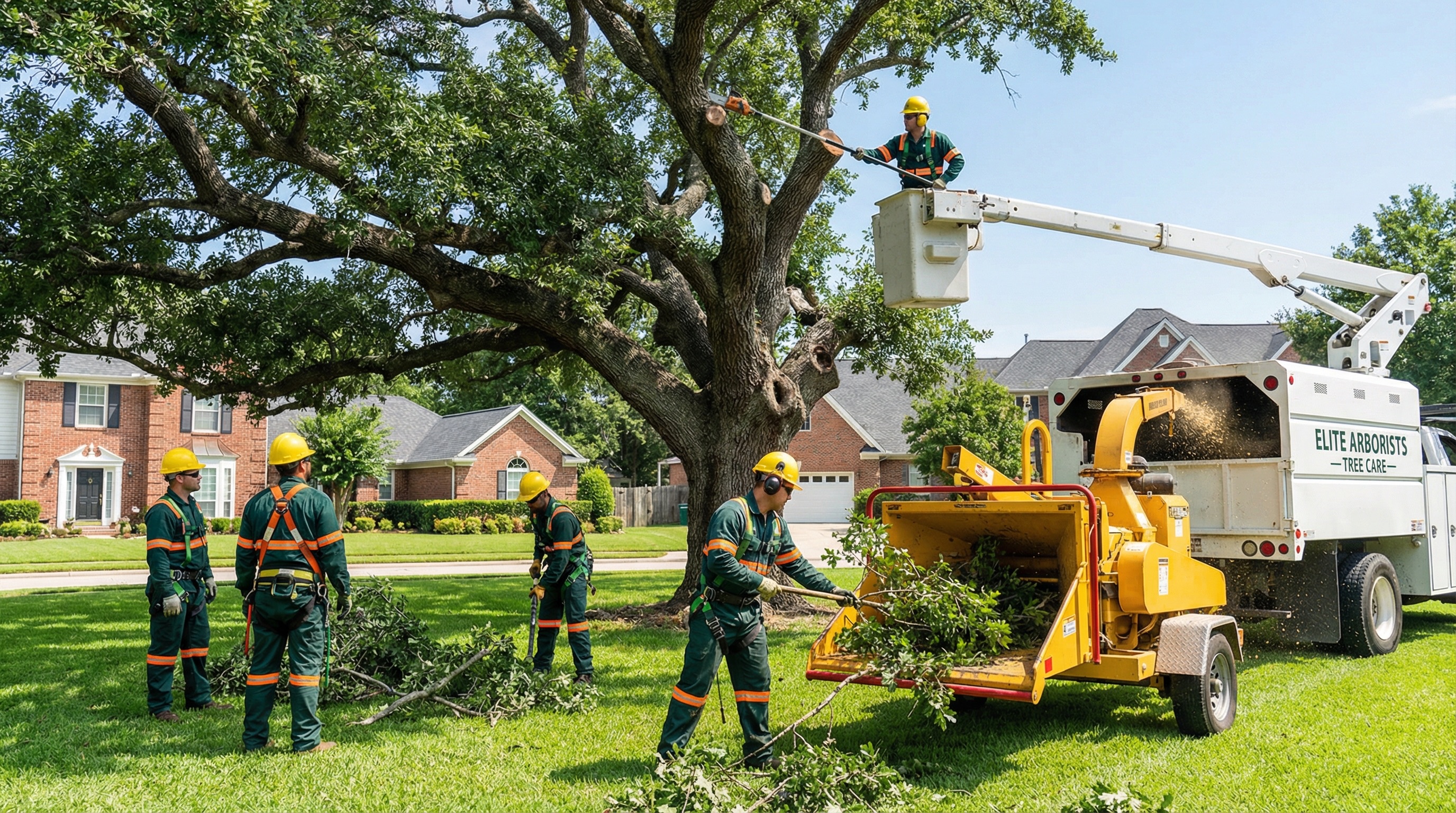
It’s 7:40pm. You’re standing in the driveway with a chainsaw in one hand and your phone buzzing in your pocket with a call you can’t take.
That call goes to voicemail. So does the next one. By the time you’re home, showered, and looking at your phone, three calls sit unanswered and two of them already called the next tree service on the list.
That’s the moment most owners realize they don’t have a leads problem. They have an office problem.
This article breaks down exactly when it makes sense to hire an office manager or a CSR for your tree service, what that hire actually costs in 2026, and the one mistake that turns a smart hire into a wasted paycheck.
You don’t need an office manager because you feel busy. Plenty of one-truck operations feel busy and don’t need one yet. You need one when specific things start breaking.
Calls go to voicemail because you’re up a tree or driving to a bid. Estimates get quoted but never followed up on, so they quietly die. Invoices go out late, or don’t go out at all, while you’re stuck doing scheduling and bookkeeping at 9pm after a full day running a crew.
Any one of those, occasionally, is normal for a growing business. All of them, every week, means revenue is leaking out of a hole only an office hire can plug.
Here’s the honest benchmark. Owners running 2+ crews and doing $750K or more a year are usually past the point where they can handle the phone, the schedule, and the crews themselves.
Below that, you can often manage with a part-time answering service or a family member covering calls a few hours a day. Above it, the math flips. Every hour you spend on hold with a supplier or chasing an invoice is an hour you’re not selling, not managing, not growing.
Call volume matters as much as revenue. If you’re consistently fielding 15-20+ calls a week between new inquiries and existing customers, and a real share of them are going unanswered or unreturned same-day, that’s not a “someday” problem. That’s money walking out the door this week.
Ricky Folse with Veteran Tree Care got 10 calls in 2 days during his historically slowest season, on his very first mail drop. Imagine that volume landing on a phone nobody’s answering because the owner’s up a tree. Good marketing without someone to answer it is money wasted twice: once on the mailer, once on the missed call.
A CSR (customer service representative) covers the phones. Answering live, booking estimates onto the calendar, and doing the first follow-up call when someone doesn’t book on the spot. That alone recovers jobs that would otherwise die in silence.
An office manager does that plus more. Scheduling crews around estimates, sending and chasing invoices, ordering materials, and often running the CRM or the direct mail dashboard that shows which routes and which calls are actually turning into booked jobs.
Which one you need depends on where the bottleneck actually is. If calls are getting answered but nothing else in the back office is getting done, you need an office manager. If calls themselves are the leak, start with a CSR and grow the role from there.
Not sure which leads are worth chasing hardest? A CRM built for tracking calls to jobs gives whoever answers your phones a system instead of a notebook, so nothing falls through.
Let’s talk numbers, because “hire someone” is easy advice and a real payroll line is a different decision.
An entry-level CSR handling phones and scheduling typically runs $18-$24 an hour in most markets in 2026. That’s the lower-commitment starting point, and it’s often part-time to start.
A full office manager, someone who can run scheduling, invoicing, and follow-up without constant hand-holding, averages closer to $58,000 a year nationally, with experienced hires in the $65,000-$75,000 range depending on your market and how much you’re handing off. Add payroll tax, workers comp, and any benefits, and budget roughly 10-15% on top of base pay.
Compare that to what it’s costing you now.
If missed calls and dead-end estimates are costing you even 3-4 booked jobs a month at an average job value of $1,800-$2,500, the math on an office hire pays for itself fast. The real cost isn’t the salary. It’s what you’re already losing by not having someone there.
Here’s where owners get this wrong in both directions.
Wait too long and you personally become the bottleneck, capping the business at whatever one person can juggle. Hire too early and you’re paying someone $50K+ a year to sit through slow weeks answering a phone that barely rings.
Sound familiar? It’s the same trap that kills climber hires.
Building a predictable lead pipeline before you add headcount matters just as much for office staff as it does for crew. You need to know the call volume is real and repeatable before you build a role around managing it.
That means a controllable lead source, not a hope. Direct mail works for this specifically because you control the dial.
More letters, more calls, on a schedule you set.
Run it 60-90 days, know your real call volume and close rate, then decide if the workload justifies the hire.
When the timing’s right, the change is fast and obvious.
Calls get answered live or returned same-day, every day. Estimates that don’t book on the spot get a follow-up call within 48 hours instead of dying quietly. Invoices go out on time.
And you, the owner, start spending your day running the business instead of running from the phone to the job site and back.
Matt Morovic with Upright Tree Care runs 5 estimates in 2 hours because his calls land in the same few neighborhoods. That kind of tight scheduling only works if someone’s actually managing the calendar, not squeezing it in between climbs.
Office help isn’t just about answering the phone. It’s what makes tight, efficient days possible in the first place.
Alissa Tooley with A&J Specialties serviced and collected $25,000 in her first two weeks with direct mail, then settled into roughly $40,000 a month from mailer leads on an ongoing basis. That kind of volume, sustained month after month, doesn’t run on a sticky note and a Google Calendar. It runs on someone whose full-time job is making sure nothing slips.
If your call volume is real but not yet at the point of justifying a full-time hire, a tree service answering service can cover the gap. It’s cheap, it catches after-hours and overflow calls, and it beats voicemail every time. A fast, consistent phone script matters here too, whether it’s you, an answering service, or a future hire using it.
But an answering service has a ceiling. It can take a message and book a basic estimate.
It can’t chase invoices, manage your crew calendar, or actually own the follow-up sequence that turns a maybe into a booked job. Once your volume justifies daily ownership of that work, in-house wins on cost and on results every time.
Think of it as a bridge, not a destination. Use it while you’re proving out your lead volume, then graduate to a CSR or office manager once the numbers back it up.
Hiring an office manager or CSR isn’t really a staffing decision. It’s a decision about whether your business can finally stop depending on you personally answering every phone, chasing every invoice, and juggling every schedule by hand.
Get there in the right order.
Predictable leads first, so you know the volume justifies the hire. Then the hire, built around real numbers instead of a hunch.
Do it backward and you’re either drowning in calls you can’t answer, or paying someone to answer a phone that isn’t ringing enough yet.
Want to know if your call volume already justifies the hire? Schedule a call and we’ll map out what a predictable lead pipeline could look like in your service area, so you can make the office manager decision with real numbers instead of a guess.
Ready to grow into the neighborhoods you want?
250+ tree companies use Tree Traction. See if your zip code is available.
Book a Free Strategy CallFREQUENTLY ASKED QUESTIONS
Most owners should hire once they're running 2+ crews, doing $750K or more a year, and personally losing calls or estimates because they're on a job site instead of the phone. If your lead flow is inconsistent, fix that first. An office manager needs a steady volume of calls and estimates to manage, not an empty schedule.
A tree service office manager answers and books calls, schedules crews and estimates, handles invoicing and follow-up, and often manages the CRM or dashboard that tracks leads by route. A dedicated CSR (customer service representative) role can cover just the phones and booking if a full office manager isn't justified yet.
An entry-level CSR handling phones and scheduling typically runs $18-$24 an hour in most markets. An experienced office manager running the full back office averages closer to $58,000 a year nationally, often $65,000-$75,000 for someone who can run scheduling, invoicing, and customer follow-up without much hand-holding.
An answering service can cover overflow and after-hours calls cheaply while your call volume is still building. Once you're consistently generating enough calls and estimates that a live person needs to own scheduling, invoicing, and follow-up daily, an in-house CSR or office manager pays for itself faster than an answering service ever will.
You end up paying someone to sit through slow weeks with nothing to book, which is the same trap owners fall into hiring climbers ahead of demand. Build a predictable lead pipeline first so you know the call volume is real and repeatable, then hire into it.
About the Author
Brayden Fielding
CEO, Tree Traction
Brayden Fielding is the founder and CEO of Tree Traction, the only direct mail company in the U.S. built exclusively for tree service businesses. He's worked with 250+ tree service companies across the country, studying what makes direct mail campaigns produce real revenue (and what makes them flop). When he's not digging into route-level data or reviewing campaign results, he's talking to tree service owners about what's actually working in their markets.
KEEP READING
Tree service subcontracting looks like free money until you run the margin. What subbing a job out really pays, when to rent instead, and when to say no.
When to buy a second truck for your tree service, what a second crew costs monthly, and how route-level call data proves demand is real before you sign.
Tree service answering service vs an in-house CSR: real 2026 costs, booking rates, and the call volume threshold that tells you which one you should run.
Book a free strategy call — 30 minutes, no obligation.
Book a Free Strategy Call