
Growth 9 min July 16, 2026
Tree Trimming and Pruning Marketing: Win More Ideal Jobs

Brayden Fielding
CEO, Tree Traction
Brayden Fielding
CEO, Tree Traction
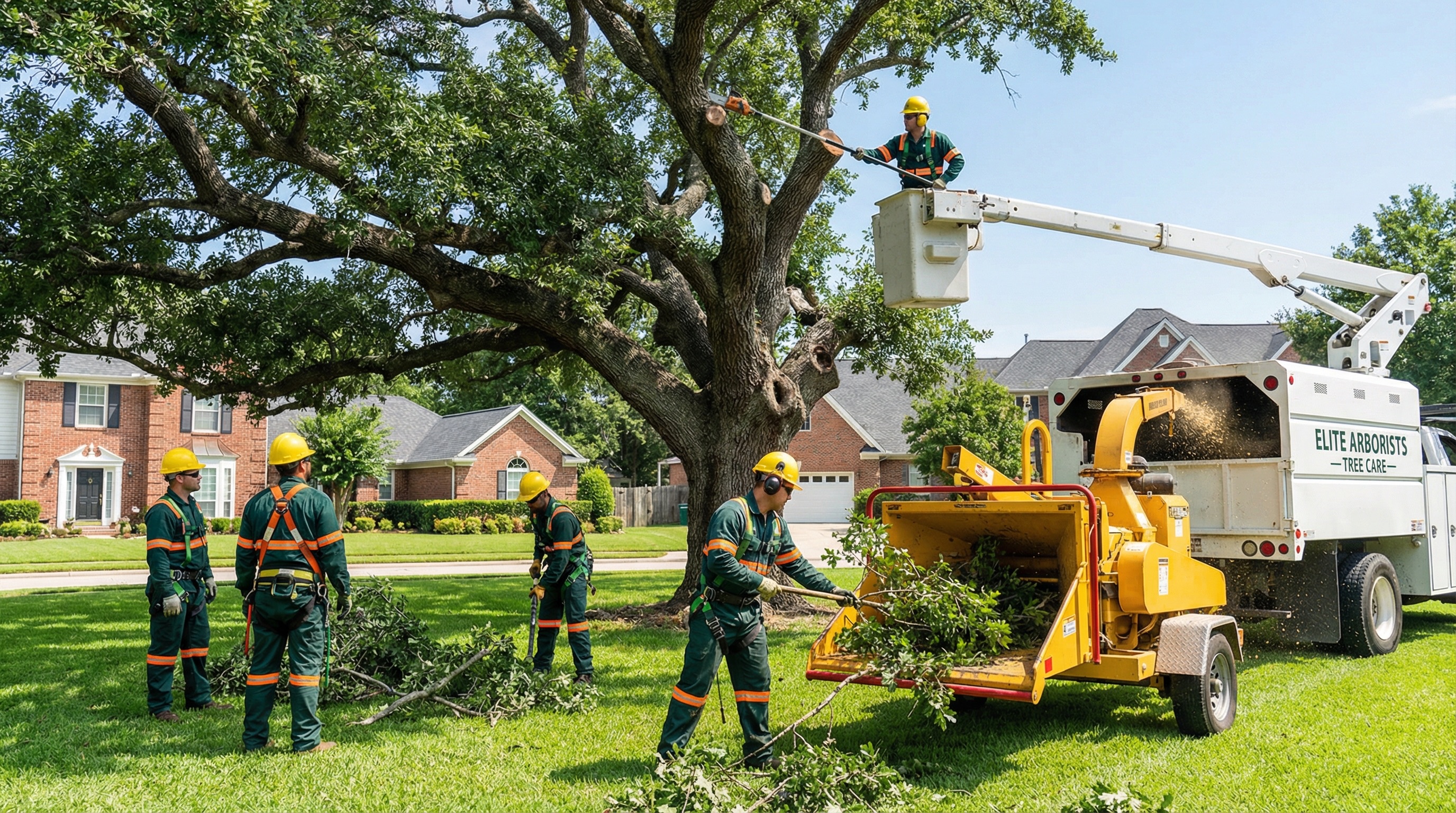
Your crew removed two trees this week and quoted a third. On the drive between those jobs, you passed a dozen properties with dead limbs hanging over driveways, canopies that haven’t been touched in three years, and overgrown branches scraping against roofs.
Nobody called about any of them.
That’s the gap in most tree service marketing. It’s aimed at removals and storm damage because those jobs are the loudest and the most urgent. Tree trimming and pruning marketing means pointing your mailers, your timing, and your language at the steadier work sitting right next to those bigger jobs, the trim and prune calls that fill your calendar between the big-ticket removals.
Removals get the attention. A 70-foot oak coming down is dramatic, it’s expensive, and it’s what shows up in your before-and-after photos.
But trim and prune work is what keeps your crew busy the other 300 days of the year. It’s less weather-dependent, it’s less equipment-intensive, and a single mature-canopy neighborhood can produce a dozen prune jobs where it might only produce one removal. Marketing that only chases the big removal misses the volume sitting right underneath it.
Trim and prune jobs also run healthier margins on the smaller end. One-off trims and prunes that take an hour or less can run 60 to 80 percent margin, while big, complex removal projects often land closer to 15 to 20 percent once you factor in crane time, hauling, and crew size.
A route full of steady trim work isn’t just easier on your schedule. It’s easier on your bottom line.
Here’s what happens when your marketing only speaks to removals and emergencies.
You get feast or famine. A storm blows through, the phone rings for a week, then it goes quiet until the next one. You end up building your whole business around weather you don’t control, which is exactly the trap storm damage marketing warns against if it’s the only marketing you’re doing.
Sound familiar? Crews sitting idle for two weeks, then everyone scrambling once the wind picks up.
Trim and prune work doesn’t wait on a storm. Mature trees need structural pruning every 2 to 5 years whether the wind blows or not, which means the demand is there year-round if your marketing is built to find it.
Mail that only mentions “emergency removal” never surfaces that steady demand. It’s not that the work isn’t out there. It’s that nobody asked for it.
Let’s talk numbers, because this is the part that gets your attention.
A single medium tree trim runs roughly $430 to $640 in most markets today. Small trees run $100 to $300, large trees run $500 to $900, and anything over 80 feet can push $900 to $1,500 or more. Most homeowners with a mature yard have more than one tree that needs work, and once a crew is already on site, adding a second or third tree to the quote is close to free labor for you and an easy yes for them.
That’s the math that makes trim-focused routes so valuable. One mailed neighborhood with real canopy can turn into three, four, or five quotes on the same street from a single blast, each one stacking on top of drive time you’ve already spent.
This is where most tree service marketing gets lazy. It mails a whole zip code and hopes the trim work shows up.
Trim and prune work is concentrated in a specific kind of neighborhood: older homes, established canopy, homeowners who’ve lived there long enough to actually notice the tree needs attention. Tree density data per carrier route is built exactly for finding those pockets, because it’s the only way to know which streets have the canopy before you spend a dollar mailing them.
Mailing blind means paying to reach households with a single sapling in the front yard, right alongside the ones with six mature oaks that need work every other year. Our internal data across 200-plus tree service campaigns shows roughly 75% of calls come from just 50% of routes mailed, and for trim and prune work specifically, that gap is usually canopy.
Route selection isn’t a nice-to-have here. It’s the whole game.
Generic mailer copy pulls in generic jobs.
“Professional tree service, call for a free quote” doesn’t tell a homeowner why they should think about their trees today. It gets read the same as every other tree company’s letter and tossed. If you want trim and prune calls specifically, the letter has to say so.
Talk about structural pruning for tree health. Mention storm-damage prevention through proactive trimming. Reference canopy clearance from rooflines and power lines, since that’s a concern almost every homeowner with mature trees actually has and rarely thinks to call about until a letter reminds them.
Specific messaging pulls specific work. Vague messaging pulls vague jobs, tire kickers, and the $150 hedge trims that aren’t why you got into this business.
What’s the difference between a homeowner who calls for “yard work” and one who calls asking specifically about deadwood removal or canopy clearance over their roof? The second one already understands the value of what you do, which means less price haggling and a faster yes once you’re standing in their yard.
Timing matters as much as targeting.
Late fall through winter is prime pruning season for most tree species. Dormant-season trimming is often healthier for the tree and cheaper to perform, and it lands right when removal-driven storm work naturally slows down. Mailing trim-focused messaging in that window fills the gap between storm seasons instead of competing with it, which is the same logic behind fall marketing and building a backlog before the calendar turns cold.
Spring is the second window. Homeowners walk their yards after winter, notice the damage and overgrowth they ignored for months, and that’s when pruning and cleanup messaging converts best. Two seasons, two windows, one steady stream of trim work if you mail for both.
Once a trim job books, don’t treat it as one closed ticket.
A crew pruning a tree in a mature-canopy neighborhood is visible the same way a removal is. Neighbors notice a clean, professional pruning job the same way they notice a stump disappearing. A yard sign at that job site, left with permission for a week or two, turns one prune job into calls from three houses down the street who’ve been meaning to get their own trees looked at.
Layer that with an upsell conversation on-site. A homeowner who booked a single-tree prune often has two or three more trees on the property that could use the same attention, and a crew already on the ladder is the easiest sale you’ll make all week.
Matt Morovic with Upright Tree Care in Wisconsin books 5 quotes in 2 hours because they’re clustered in the same neighborhood, and he 10x’d his marketing spend in his first month running mail that way. That’s not a removals story. That’s what happens when route targeting concentrates work geographically, whether the jobs are removals, prunes, or a mix of both.
Carlos Morales with JC Tree Care in New Mexico quoted $40,600 in his first week off a single mail drop. Results like that don’t come from mailing every zip code equally. They come from mailing the routes where the work actually lives, then writing the letter to speak to the specific job you want more of.
Lars Kangas with Kangas Tree Service quoted $76K and closed $61K in his first six weeks, and he’s said the calls he gets are “very, very serious” ones for real tree work, not yard cleanups. That’s the kind of call quality that route targeting and specific messaging produce together, whether the job on the letter is a removal or a prune.
Trim and prune jobs are sitting in your service area right now, on streets you already drive past, on trees your marketing has never mentioned.
Removal and storm-chasing marketing will always feel more exciting. But the steady margin, the clustered routes, and the calendar-filling volume live in the trim and prune work most tree services never bother to market for directly.
Want to see which routes in your area have the canopy and the household profile to produce steady trim and prune quotes? Schedule a 15-minute call and we’ll map it out, free, before you spend a dollar.
Real tree work doesn’t have to mean waiting for the next storm.
Ready to grow into the neighborhoods you want?
250+ tree companies use Tree Traction. See if your zip code is available.
Book a Free Strategy CallFREQUENTLY ASKED QUESTIONS
General tree service marketing tends to default to removal and storm messaging because those jobs are the biggest and most urgent. Tree trimming and pruning marketing deliberately targets the routes, seasons, and language that book trim and prune work specifically, since that work runs steadier margins and fills the calendar between removals.
Most homeowners pay somewhere between $430 and $640 for a single medium tree, with small trees running $100 to $300, large trees $500 to $900, and very large trees pushing $900 to $1,500 or more. Route targeting that finds homeowners with multiple mature trees turns a one-tree trim into a multi-tree quote.
Late fall through winter is prime time for structural pruning on dormant trees, and mailing ahead of that window builds a backlog before the slow season hits. Spring is the second window, when storm-damaged and overgrown limbs from winter become visible again.
It works well for pruning, and arguably better, because pruning routes cluster. A neighborhood with mature trees usually has several homes that need the same work, so one mailer drop can produce multiple trim quotes on the same street instead of one scattered removal call across town.
Target routes with mature canopy and higher property values instead of blanketing a whole zip code, and write messaging around structural pruning and tree health rather than generic 'yard work.' Vague messaging pulls in vague jobs. Specific messaging pulls in the specific work you want.
About the Author
Brayden Fielding
CEO, Tree Traction
Brayden Fielding is the founder and CEO of Tree Traction, the only direct mail company in the U.S. built exclusively for tree service businesses. He's worked with 250+ tree service companies across the country, studying what makes direct mail campaigns produce real revenue (and what makes them flop). When he's not digging into route-level data or reviewing campaign results, he's talking to tree service owners about what's actually working in their markets.
KEEP READING
Tree service businesses sell for 2x to 4x SDE. Here's what sets the multiple, what buyers discount hardest, and why owning your call data raises the number.
Crane tree removal jobs pay several times a standard takedown. Here's how to find the neighborhoods holding those trees and get the phone to ring.
What tree service online reputation management actually covers, what the agencies charge for it, and which parts you can run yourself in a few minutes a week.
Book a free strategy call — 30 minutes, no obligation.
Book a Free Strategy Call