
Growth 9 min April 8, 2026 Updated October 7, 2026
How to Grow a Tree Service Business to $1M+

Brayden Fielding
CEO, Tree Traction
Brayden Fielding
CEO, Tree Traction
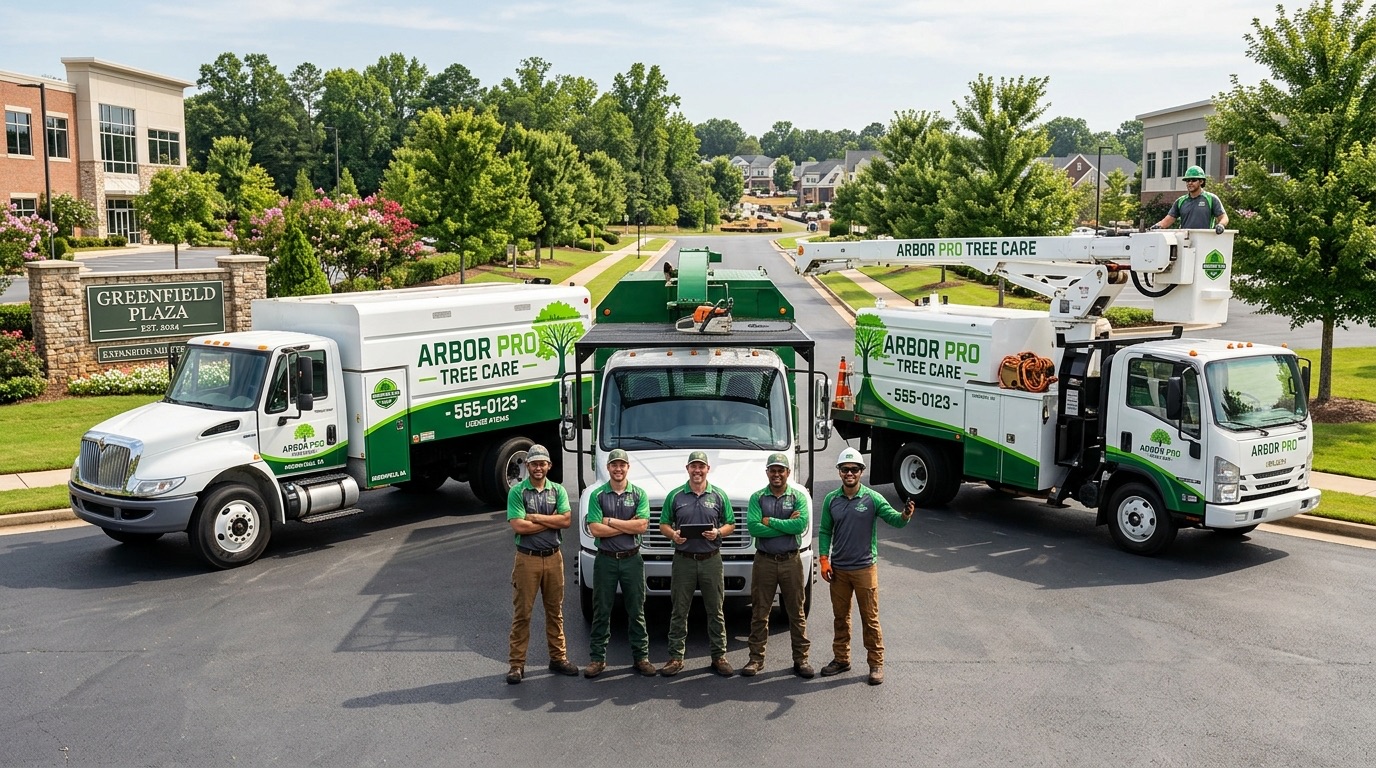
Alissa Tooley with A&J Specialties was running estimates, managing crews, and doing admin at midnight. Then she started a targeted direct mail campaign and serviced $25K in paid work in her first two weeks. Within three months, she’d quoted $160,800 and closed $69,200 from mailer leads alone.
She didn’t add a new service. Didn’t buy a new truck. She solved the one problem that keeps most tree service owners from crossing $1M: consistent, predictable leads.
If you want to grow a tree service business past the $1M mark, that’s where it starts. Not one big breakthrough. Just fixing the bottleneck that keeps you stuck.
Most tree service businesses do between $300K and $500K a year. They’ve got one or two crews, the owner’s still climbing (or at least running every estimate), and the phone rings enough to stay busy but not enough to grow.
Sound familiar?
The problem isn’t skill. It’s not equipment. It’s not even market size. The problem is that every growth lever requires the same thing before you can pull it: knowing that leads will keep coming.
You can’t hire a third crew if you’re not sure you’ll have work for them next month. You can’t bring on a dedicated estimator if you don’t trust the pipeline. You can’t stop climbing trees yourself if the business falls apart without you in the field.
Every decision that moves you from $500K to $1M depends on lead flow you can predict and control.
Growth in this trade isn’t a smooth curve. It’s a series of steps, and each step needs a different thing from you.
IBISWorld sizes the US tree trimming services industry at $26.0 billion across 19,929 businesses in 2026. That works out to roughly $1.3 million per company on paper, except the number is dragged upward by national operations like Asplundh and Davey. The typical residential outfit with a bucket truck and two guys is nowhere near it, which is exactly why the jump from $500K to $1M feels so much harder than the jump from $200K to $500K.
Here’s what each tier actually requires:
| Revenue tier | Crews | Owner’s job | Marketing spend | Booked jobs needed per month |
|---|---|---|---|---|
| $250K to $500K | 1 | Climbing, quoting, billing, everything | 3% to 5% of revenue, mostly word of mouth | 15 to 25 |
| $500K to $750K | 2 | Out of the tree, still running every quote | 5% to 8%, one tracked channel | 30 to 45 |
| $750K to $1M | 2 to 3 | Full-time sales and scheduling | 8% to 12%, two tracked channels | 45 to 60 |
| $1M to $2M | 3 to 5 | Managing managers, not crews | 8% to 12%, plus a dedicated estimator | 60 to 110 |
Job counts assume an average residential ticket around $1,200. Run your own average through it and the numbers move, but the shape doesn’t.
Find your row. The bottleneck holding you back is almost always the thing in the next row down that you skipped.
There’s no single hack that gets you there. But after working with 250+ tree service companies, we’ve seen the same pattern play out over and over. The owners who hit $1M+ do these things, roughly in this order.
Before you spend another dollar on marketing, you need to know three things: your average job size, your close rate, and your cost per booked job on every channel you’re using.
Here’s why that matters. If your average residential job is $1,200 and your close rate is 45%, you need roughly 150-160 booked jobs per year to hit $1M. That’s about 330-360 estimates.
At 30 estimates per month, you need 30-40 qualified leads per month (accounting for no-shows and tire kickers).
Work the math backward from your revenue goal. Most tree service owners have never done this, and it changes how you think about every marketing dollar.
This is the unlock. Every other growth move depends on it.
The unlock isn’t just call volume. It’s where the calls come from. When mail goes to selected carrier routes instead of a whole zip code, the quotes cluster into a handful of neighborhoods, and an owner can run several in one afternoon instead of crossing the county for each one.
That’s what predictable lead flow actually looks like in tree service. Not just more calls, but calls from the right neighborhoods, from homeowners who can afford professional tree work, and who aren’t shopping four other companies at the same time.
The tree service owners who grow fastest pick a lead source they can control and scale. Direct mail works for this because you choose how many pieces go out, which neighborhoods get hit, and when.
More mail, more calls. Less mail, fewer calls. That kind of control lets you plan hiring, plan equipment purchases, and plan crew schedules around real numbers.
Here’s the hardest part, and the part that separates the $500K company from the $1M company: you have to get out of the field.
If you’re the climber, the estimator, the bookkeeper, and the owner, your business has a ceiling. It’s whatever you can personally produce in a week. And you’re probably already working 60-70 hours to hold that ceiling up.
The hiring order that works for most tree service companies growing past $750K:
Each of those hires costs money. And none of them makes sense unless you have enough lead flow to keep everyone busy. That’s why solving leads first isn’t optional. It’s the prerequisite for everything else.
Getting out of the field pays twice, and the second payment is bigger than most owners realize. Buyers price an owner-run tree service at the bottom of the range and a crew-run one at the top, which is why what a tree service business is actually worth comes down to how much of it keeps running when you’re not there.
Most tree service companies doing $500K are spending 3-5% of revenue on marketing. Mostly word of mouth, maybe an Angi profile, maybe some sporadic Google Ads.
That’s a maintenance budget. Not a growth budget.
Across the 250+ tree service companies we’ve worked with, the ones actively pushing toward $1M are spending 8-12% of revenue on marketing. For a $500K company, that’s $40K-$60K per year, or roughly $3,300-$5,000 per month across all channels.
One 2026 reality worth noting: Google LSA launched a “Get Competitive Quotes” feature that now routes a single homeowner’s request to multiple tree service companies simultaneously. That means Google’s own platform is now sharing leads in the same way Angi does. If you’re counting on LSA for exclusive calls, you need to recalibrate that assumption. This is part of why direct mail’s position has strengthened for growth-stage companies: a mailer lands in one homeowner’s hand, and they call one company.
But here’s the part nobody tells you: it’s not about spending more. It’s about tracking what works and cutting what doesn’t.
The owners who get more out of the same budget aren’t throwing money at the wall. They’re running every carrier route with its own tracking phone number, so they can see exactly which neighborhoods produce calls and which ones are dead weight, then move next month’s spend accordingly.
If you’re spending $3,000 a month on marketing and you can’t tell me which dollars booked which jobs, you’re not running a marketing budget. You’re making a donation.
Track your cost per booked job on every channel, every month. Then double down on what’s working and cut the rest.
The difference between a tree service that grinds to $700K and one that blows past $1M usually comes down to this: the $1M company has a system. The $700K company has a collection of random marketing tactics.
What does a system look like? You know that mailing 4,600 letters this month produces roughly X calls. You know which neighborhoods produce the highest-value jobs and your cost per booked job on every channel.
And you know that next month will be similar to this month because your lead source is consistent and trackable.
Route-level tracking is the example we see make the biggest difference. When every carrier route has its own tracking phone number, you’re not guessing which neighborhoods work. You know.
Our data across 250+ tree service companies shows that 75% of calls come from just 50% of the routes mailed. If you’re mailing blind, you’re wasting half your budget every single month and you’d never know it.
A system that improves over time beats a bigger budget spent blindly. Every time.
Once your current zones are producing consistent work, the next growth lever is geographic expansion. But most tree service companies do this wrong.
They pick a new city or county, blast some ads or mailers into the whole area, and hope for the best. Then they’re driving 45 minutes each way for a $600 trim job that doesn’t close. That’s not expansion. That’s a waste of diesel.
Smart expansion into new tree service areas means mailing with the same data-driven targeting you used in your home market. Geographic clustering keeps your estimates tight even in unfamiliar territory. You want 3-4 bids in the same neighborhood in one afternoon, not one call from the north side and another 40 minutes south.
The mechanism is the same one that works at home: pick the routes with the tree density and the household income to support professional rates, mail those, and let the tracking numbers tell you within 60 days whether the new market deserves a second month. That beats committing a year of budget to a county you’ve never worked.
This is the growth trap that kills tree service companies: you need crews to do the work, but you can’t hire crews unless you have the work. And by the time the work shows up, you’re turning down jobs because you don’t have the people.
The companies that break through this cycle do something uncomfortable. They hire one step ahead of where they are. They bring on that third crew before they’re at 100% capacity, because they know their lead flow is predictable enough to fill the schedule within 30-60 days.
But this only works if your marketing gives you confidence in what next month looks like. If you’re relying on word of mouth and seasonal spikes, hiring ahead is a gamble. If you’re running a trackable lead system where you can see call volume, close rates, and booked revenue by neighborhood, hiring ahead is a calculated bet with good odds.
So what actually makes a pipeline trustworthy enough to hire against? Consistency you can point at. Not one big month, but four months where the mail volume, the call count, and the close rate all landed inside a range you predicted.
That kind of call quality lets you hire with confidence. You’re not filling your schedule with $200 trim jobs from Angi that barely cover the drive time.
Here’s a quick gut check. If you’re aiming for $1M+ in the next 12-18 months, you should have:
If you’re missing two or three of these, you know exactly where to focus. And most of them trace back to the same root: a reliable lead pipeline.
Growing a tree service business to $1M+ isn’t about working harder. You’re probably already working harder than most people can imagine. It’s about building systems that let your business grow without you personally doing every climb, every estimate, and every follow-up call.
It starts with leads you can predict, plan around, and scale. Everything else follows from that.
Want to see which neighborhoods in your service area have the highest tree density, the right income levels, and zero competition from other mailers? We’ll map it out for you, free, with no commitment.
Ready to grow into the neighborhoods you want?
250+ tree companies use Tree Traction. See if your zip code is available.
Book a Free Strategy CallFREQUENTLY ASKED QUESTIONS
IBISWorld sizes the US tree trimming services industry at $26.0 billion across 19,929 businesses in 2026, an average near $1.3 million per company. That average is badly skewed by national giants like Asplundh and Davey, so the typical owner-operated residential tree service sits well below it. The difference between the ones that cross $1M and the ones that stall is consistent lead flow, crew capacity, and whether the owner has stepped out of the field.
Most tree service companies hitting $1M+ are running 3-5 crews. Each crew should be generating $15K-$25K per week in completed work. You also need a dedicated estimator or sales role to keep close rates high as volume increases.
Growth-stage tree service companies typically spend 8-12% of revenue on marketing. For a company doing $500K aiming for $1M, that's $40K-$60K per year across all channels. The key is tracking cost per booked job on every channel and cutting what doesn't produce.
The fastest growth lever is consistent, predictable lead flow. You can't hire crews, buy equipment, or expand into new areas without confidence that the work will be there. Companies that grow fastest combine a reliable lead source like targeted direct mail with strong sales processes and disciplined hiring.
Start by building a lead pipeline you can count on month after month. Then hire in this order: a lead climber to replace you on the tree, a foreman to run the crew, and an estimator to handle sales. You can't delegate any of those roles until you trust the work will keep coming.
About the Author
Brayden Fielding
CEO, Tree Traction
Brayden Fielding is the founder and CEO of Tree Traction, the only direct mail company in the U.S. built exclusively for tree service businesses. He's worked with 250+ tree service companies across the country, studying what makes direct mail campaigns produce real revenue (and what makes them flop). When he's not digging into route-level data or reviewing campaign results, he's talking to tree service owners about what's actually working in their markets.
KEEP READING
Tree service businesses sell for 2x to 4x SDE. Here's what sets the multiple, what buyers discount hardest, and why owning your call data raises the number.
Crane tree removal jobs pay several times a standard takedown. Here's how to find the neighborhoods holding those trees and get the phone to ring.
What tree service online reputation management actually covers, what the agencies charge for it, and which parts you can run yourself in a few minutes a week.
Book a free strategy call — 30 minutes, no obligation.
Book a Free Strategy Call