
Growth 9 min July 19, 2026
Arborist Marketing: How Certified Arborists Win the High-Value Jobs

Brayden Fielding
CEO, Tree Traction
Brayden Fielding
CEO, Tree Traction
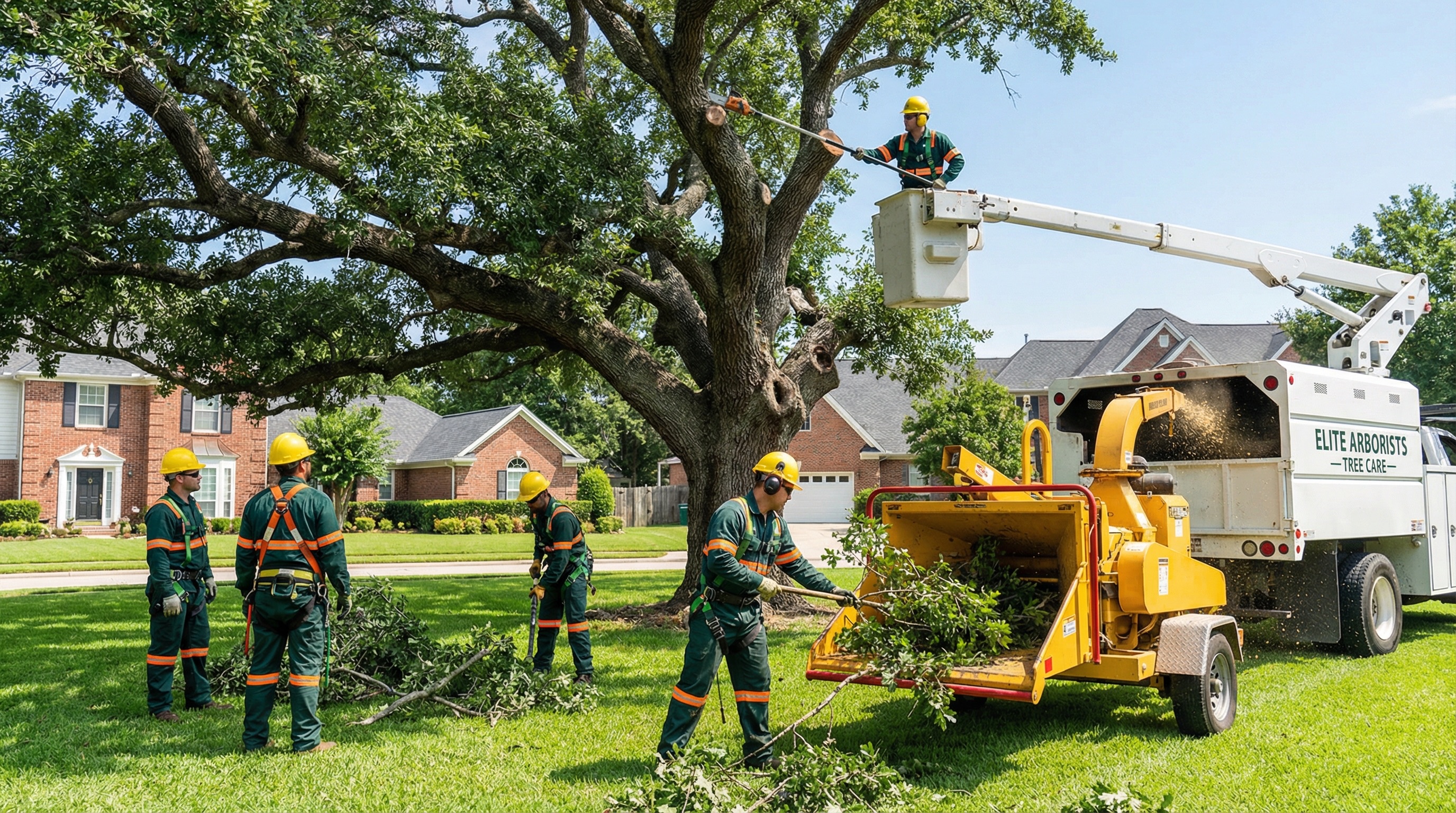
There are roughly 35,000 ISA Certified Arborists in the country, and most homeowners couldn’t tell you what that credential means or why they should care. That’s the whole problem with arborist marketing in one sentence.
You spent years and a real exam earning a credential that proves you know tree biology, risk assessment, and pruning standards better than the guy with a chainsaw and a Facebook page. And then your marketing looks exactly like his.
Certified arborists typically command 10 to 30% more than the lowest bid on a job. On a $1,000 removal, that’s $100 to $300 you’re either capturing or leaving on the table.
But that premium doesn’t show up automatically. It shows up when your marketing actually explains what the certification means before the homeowner ever calls three other companies for a price.
Most certified arborists treat the credential like a plaque on the office wall. It’s mentioned once, on the “About Us” page, in a paragraph nobody reads.
That’s a wasted asset.
The certification is proof. It’s the one thing an uncertified competitor literally cannot claim, no matter how many years they’ve been running a chainsaw.
Homeowners comparing bids can’t evaluate technique or judgment. They can evaluate a credential, if you put it in front of them and explain what it means.
Arborist marketing that works puts the certification into the headline, the mailer, and the estimate, not just the website footer. “ISA Certified Arborist” means nothing to a homeowner on its own. “Tested and certified on tree biology, risk assessment, and pruning standards, not just years on the job” means something.
Here’s the uncomfortable truth. From the curb, your crew and an uncertified crew look identical.
Same trucks. Same safety gear. Same “we do tree work” pitch on a flyer.
The homeowner has no way to know one of you passed a 200-question exam on arboriculture and the other one didn’t, unless your marketing tells them.
That’s why so many certified arborists end up quoting against price-shopping crews that have no business bidding on a tree preservation job. You’re not losing those bids because your price is high. You’re losing them because your marketing never explained why your price should be higher.
Fix the message, and you stop competing in the same bucket as the uncertified guy.
Not every tree job needs a certified arborist. A routine trim on a healthy maple doesn’t require an ISA credential to execute well.
But some jobs live or die on real expertise. Tree preservation on a mature oak near a foundation. A risk assessment before a storm on a tree that could take out a roof.
Diagnosing what’s actually wrong with a declining tree instead of just cutting it down. These are the jobs where a homeowner is paying for judgment, not labor, and they’re exactly the jobs your certification was built for.
Arborist marketing gets a lot easier when you stop chasing every tree job in the zip code and start targeting the ones that reward what you actually know.
That means finding the neighborhoods with older, larger, higher-value trees on higher-value properties. Those homeowners are far more likely to want a tree saved than removed, more likely to need a genuine risk assessment, and more willing to pay for the person who can prove they know the difference between a tree that needs pruning and a tree that needs to come down.
Once a homeowner starts shopping tree service quotes online, you’re in the same pile as every uncertified crew in town. Angi and Google don’t have a filter for “actually certified.” They just show a list of companies and a star rating.
By the time you’re bidding against four other quotes, your credential is one line in a comparison table the homeowner is skimming for the lowest number.
Direct mail changes the order of operations. A letter reaches the homeowner before they’ve searched anything, while they’re looking at the declining oak in their yard and wondering what to do about it.
There’s no comparison table. There’s your name, your credential explained in plain language, and a phone number.
Exclusive leads matter even more for arborist marketing than for general tree work, because the whole pitch depends on the homeowner hearing your credential first, before three other bids muddy the decision into a race to the bottom on price.
This is where arborist marketing gets specific instead of generic.
Tree Traction tracks 295 data points per carrier route, including satellite-measured tree density, canopy size, and property value. We’re the only company in the country with tree density data at the individual carrier route level. For a certified arborist, that means finding the exact routes with older, larger canopy on higher-value homes, the neighborhoods where preservation and risk assessment work actually lives.
You’re not mailing every zip code hoping someone with a dying oak happens to open the envelope. You’re targeting the specific routes where mature, valuable trees are already sitting on properties owned by people who can afford to do it right.
That’s the difference between a mailer that gets thrown away and one that lands with the exact homeowner who needs what you’re certified to do.
Here’s a question worth asking yourself. If a homeowner glanced at your mailer for three seconds, would they know you’re a certified arborist, or would it read like every other tree flyer in the stack?
Most tree service mailers lead with a service list: removals, trims, stump grinds. That’s fine for a general tree service. It’s a wasted opportunity for a certified arborist, because it puts your credential on the same shelf as every uncertified crew running the same three services.
The mailer should say it plainly, in the headline or the opening line, not buried in a paragraph nobody finishes. Something a homeowner can absorb in the three seconds before deciding whether to keep reading or toss it: certified, tested on tree biology and risk assessment, not just years behind a chainsaw. Pair it with a photo of you or your crew doing real assessment work, not just a stump pile, and the mailer starts doing the differentiating for you before the phone even rings.
Tree Traction designs and A/B tests every mailer by market, which means a certified arborist’s piece should never look like a generic tree flyer. It should look like what it is: proof that the person calling knows more than the guy with a truck and a Facebook page.
Every certified arborist has heard some version of “the other guy quoted me half that.” It’s the most common objection in the trade, and it’s almost always because the homeowner never understood what they were actually comparing.
Good arborist marketing kills that objection before the estimate. If your mailer and your messaging already explained that certification means testing on tree biology, risk assessment, and pruning standards, the homeowner walks into the estimate understanding they’re not comparing two identical bids. They’re comparing a certified professional to an unknown quantity.
Handling price objections well starts long before the estimate. It starts with the marketing that set the homeowner’s expectations in the first place.
Carlos Morales at JC Tree Care in New Mexico quoted $40,600 in jobs in his first week running targeted direct mail. Alissa Tooley at A&J Specialties quoted $160,800 over three months and closed $69,200 of it, with mailer-driven revenue running consistently around $40,000 a month.
Neither of those numbers came from competing on the cheapest bid. They came from reaching the right homeowners with a message that gave them a reason to pick up the phone and call one company, not five.
That’s the model for arborist marketing. Stop trying to out-cheap the uncertified crew down the street. Target the properties where your expertise is worth paying for, and put your credential in front of those homeowners before anyone else gets the chance.
You already did the hard part. You passed the exam, you keep up the continuing education, and you can back up every claim you make about tree health and risk with real training.
The only thing standing between that credential and a stronger revenue number is whether your marketing actually says so, to the right homeowners, before they’ve already collected three other bids.
Arborist marketing isn’t about spending more. It’s about spending it on the neighborhoods with the trees worth saving, and making sure the message actually explains why you’re the one to call.
Want to see which routes in your area have the mature canopy and property values where certified expertise wins the job? Schedule a call and we’ll map your market and show you exactly where your letter should land.
Ready to grow into the neighborhoods you want?
250+ tree companies use Tree Traction. See if your zip code is available.
Book a Free Strategy CallFREQUENTLY ASKED QUESTIONS
Yes, if your marketing tells homeowners about it. Certified arborists typically charge 10 to 30% more than the lowest bid on a job, which on a $1,000 removal is $100 to $300 more. That premium only shows up when the homeowner knows the certification exists and understands why it matters before you ever quote the job.
An ISA Certified Arborist has passed an exam covering tree biology, risk assessment, and pruning standards, and carries continuing education requirements to keep the credential current. A tree service without that certification can still do good work, but there's no third-party proof of it. Homeowners can't tell the difference from a truck door, which is exactly why arborist marketing has to spell it out.
Lead with the credential in your messaging instead of burying it in a bio page. Name what it means in plain language: tested on tree biology, risk assessment, and pruning standards, not just experience. Target the jobs where expertise actually matters most, like tree preservation, risk assessment, and high-value or historic trees, and reach those homeowners before they've already collected three bids from uncertified crews.
The channel doesn't have to change, but the message does. A general tree service ad talks about removals and stump grinding. Arborist marketing talks about tree health, preservation, and expert risk assessment, the kind of language that reaches homeowners willing to pay for judgment, not just a chainsaw.
Neighborhoods with older, larger, more valuable trees on higher-value properties. These are the homeowners most likely to want a tree saved instead of removed, most likely to need a real risk assessment before a storm, and most willing to pay a premium for someone who can prove they know what they're doing.
About the Author
Brayden Fielding
CEO, Tree Traction
Brayden Fielding is the founder and CEO of Tree Traction, the only direct mail company in the U.S. built exclusively for tree service businesses. He's worked with 200+ tree service companies across the country, studying what makes direct mail campaigns produce real revenue (and what makes them flop). When he's not digging into route-level data or reviewing campaign results, he's talking to tree service owners about what's actually working in their markets.
KEEP READING
Tree trimming and pruning marketing means targeting the routes, timing, and messaging that book steady trim work, not just removals and storm calls.
Tree service upselling doesn't take a sales script. Here's how to spot the work, present it naturally, and add $300-$800 to the average job without pressure.
Stop losing tree service jobs to 'I'll get a few more quotes.' Here's how to handle price objections before they come up and close more estimates at your actual rate.
Book a free strategy call — 30 minutes, no obligation.
Book a Free Strategy Call